Chicago Construction News staff writer
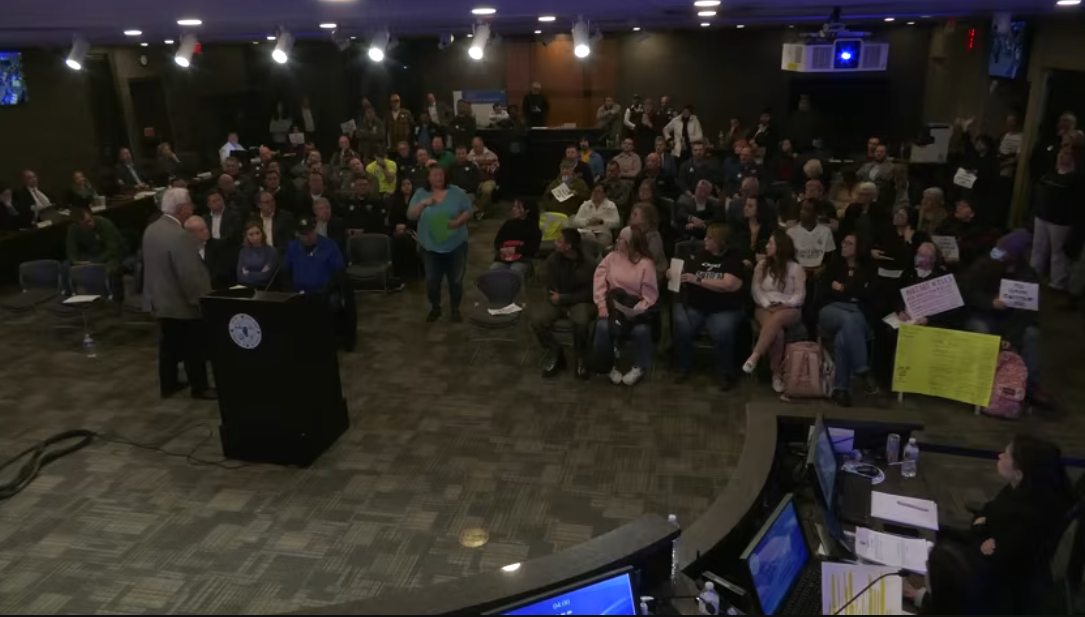
The city council adjourned just before midnight without voting on a key annexation agreement for a proposed 795-acre data centre campus after a marathon public hearing stretched more than seven hours.
Under state law, the council could not continue meeting past midnight as Illinois voters head to the polls today (March 17) for the primary election.
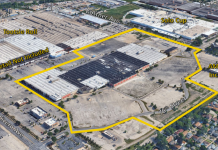
The proposed Joliet Technology Center, planned for farmland south of the Chicagoland Speedway, is expected to generate between 7,000 and 10,000 construction jobs over seven years.
Developers, Dallas-based Hillwood Investment Properties and Virginia-based PowerHouse Data Centers, plan to break ground in early 2027, with the first phase completed by 2028 and the full buildout targeted for 2032.
Construction union representatives voiced support for the project, calling it a significant opportunity for local trades.
“This is a tremendous opportunity for not only us laborers, but for all union trades and community members in this room,” said Jack Connelly, representing LiUNA. “LiUNA is looking forward to sending our hardworking and reliable members to work on this project and strongly urge the board to vote yes.”
Council is scheduled to reconvene Thursday at 5 p.m. to continue deliberations on the proposal.
More than 150 residents spoke during the hearing that several hundred attended, the majority urging council to reject the project. Concerns focused on water and energy use, land use and noise. The final speaker presented a petition with more than 4,700 signatures opposing the development.
Tia Quinerly, who started the petition, told council members they have a responsibility to reflect public opinion.
“It is clear that the overwhelming majority of residents oppose this project and that raises a very important question,” she said. “If the city council votes yes on this, whose interests are being represented here?”
The campus would include 24 two-storey buildings constructed in four phases, each with six buildings and its own power substation connected to nearby transmission lines.
The facility, focused on artificial intelligence operations, is expected to draw about 1.8 gigawatts of electricity annually — roughly half of the yearly consumption of the city of Chicago. Consultants said the regional grid operator PJM has confirmed the system can handle the load, while ComEd said northern Illinois service would not be affected.
The project’s cooling system is expected to require about 100,000 gallons of water per building daily, potentially rising to 150,000 gallons at full buildout. Joliet is planning a pipeline to bring water from Lake Michigan as its local aquifer declines.