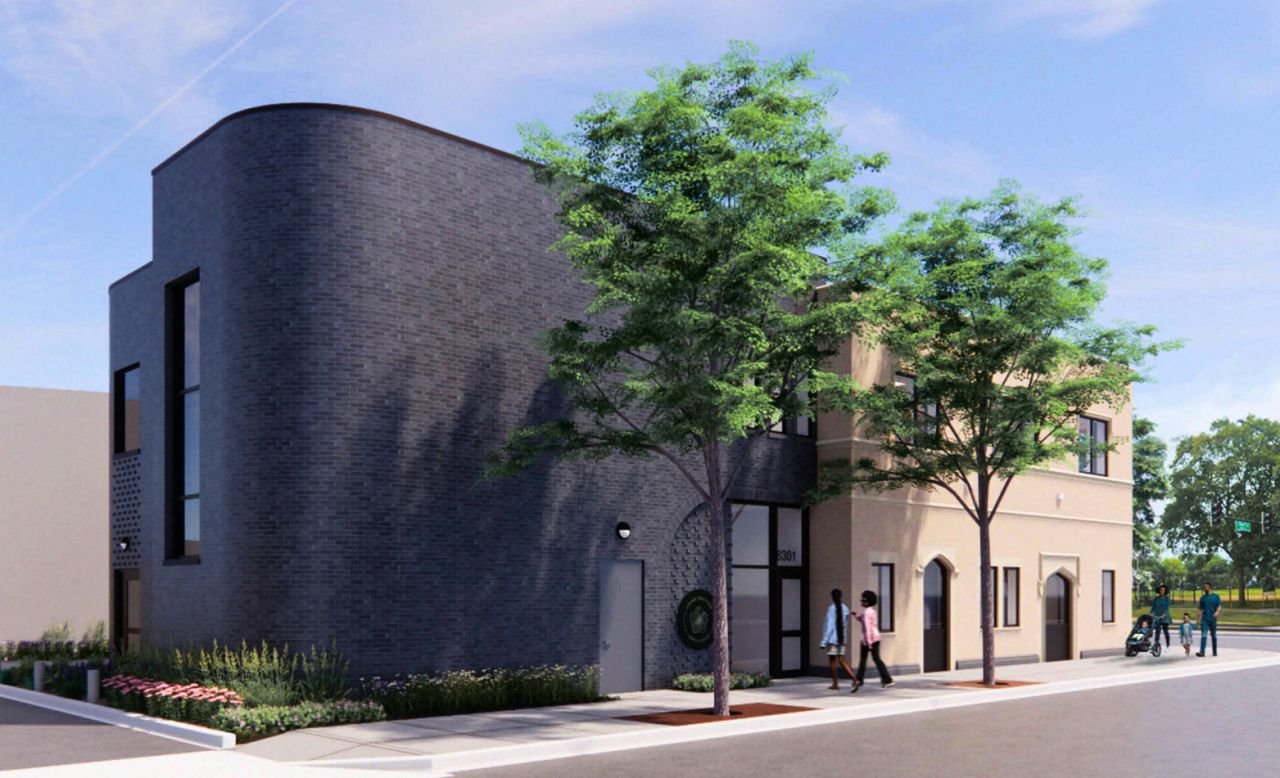
Chicago Construction News staff writer< Construction has begun on the $7.7 million Chicago South Side Birth Center (CSSBC), a project that will convert a former church building into a community-based reproductive health facility on Chicago’s South Side. SMNG A Ltd. is the project architect.
The $7.4 million project is supported in part through funding tied to the city’s Housing and Economic Development (HED) bond program, with $3.3 million allocated through a Community Development Grant administered by the Chicago Department of Planning and Development. The funds are being used for construction, rehabilitation work and landscaping.
The project will include three birthing suites and on-site midwifery care, along with services such as prenatal and postpartum care, lactation support, childbirth education, wellness programming and broader reproductive health services.
Once complete, the facility is expected to operate as a nonprofit care centre aimed at improving access to maternal health services in a part of the city where hospital-based maternity care is limited.
City officials say the South Side currently has just four hospitals providing maternity services, a constraint that has contributed to longstanding disparities in maternal and infant health outcomes.
The development is intended to provide locally based, midwife-led care designed to improve continuity of care for expectant parents and reduce barriers to accessing services.
Supporters of the project say it was shaped through community engagement and reflects an effort to address gaps in maternal health care delivery. The initiative emphasizes culturally responsive care and aims to improve outcomes for Black birthing families, who have been disproportionately affected by maternal health disparities.
The CSSBC will also include programming focused on education and wellness, with an emphasis on supporting families before, during and after birth.
The project adds to ongoing efforts in Chicago to expand community-based health infrastructure on the South Side through redevelopment of existing buildings into service-oriented facilities.