New York Construction Report staff writer
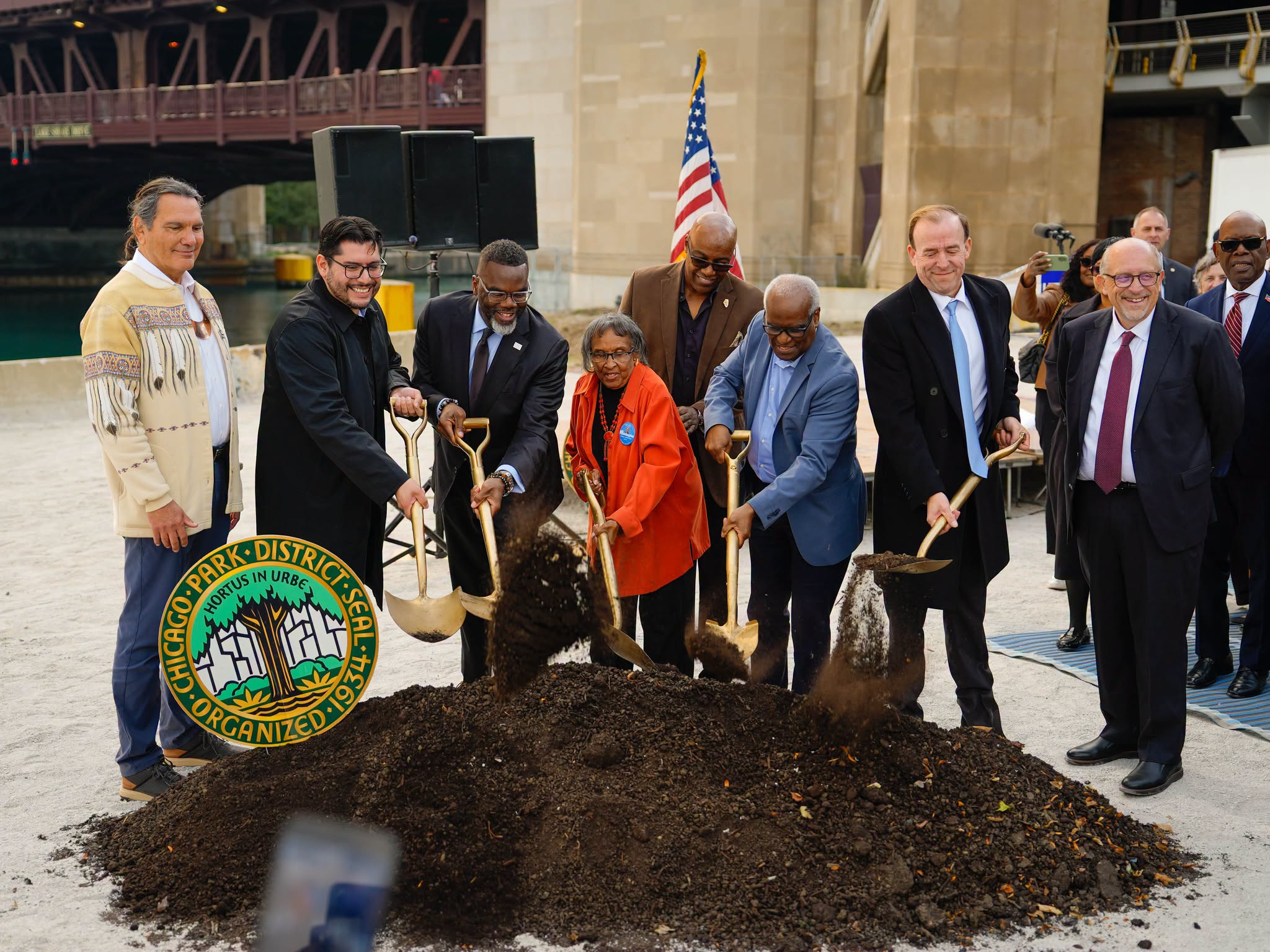
Construction is beginning on a 3.44-acre park along Chicago’s lakefront, following a groundbreaking ceremony attended by Mayor Brandon Johnson, Chicago Park District officials and community stakeholders.
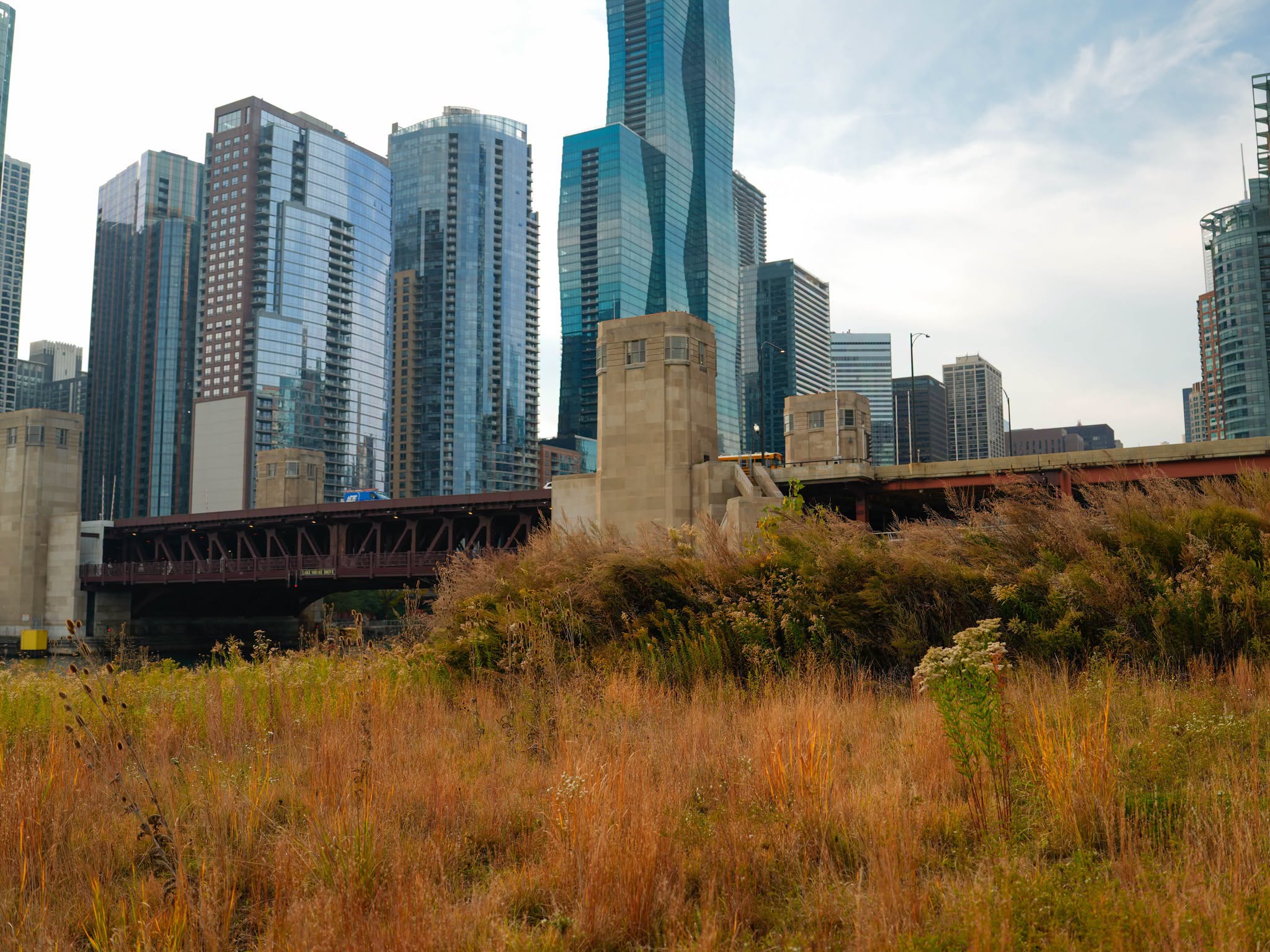
DuSable Park, located at 451 N. Lake Shore Drive, will occupy a site at the confluence of the Chicago River and Lake Michigan. The park is named for Jean Baptiste Point DuSable, widely recognized as Chicago’s first permanent non-Indigenous settler, and will include walking trails, gathering spaces, public art and landscaped areas.
The project has been decades in the making. The site was created through landfill in the late 19th century and designated as DuSable Park by former Mayor Harold Washington in 1987. It was transferred to the Chicago Park District the following year.
An environmental remediation project was completed at the site in 2021, with funding support from the U.S. Environmental Protection Agency.
 The park is being developed through a public-private partnership involving the Chicago Park District and Related Midwest. Related Midwest has committed $10 million toward construction, representing the bulk of the project’s estimated cost.
 Additional funding includes a $5-million City of Chicago Open Space Impact Fee grant, $400,000 from the Illinois Department of Commerce and Economic Opportunity through state Sen. Mattie Hunter, and $1 million from the Chicago Park District.
The park will be accessible through Founders Way, a planned extension of the Chicago Riverwalk being developed in conjunction with the 400 Lake Shore Drive project.
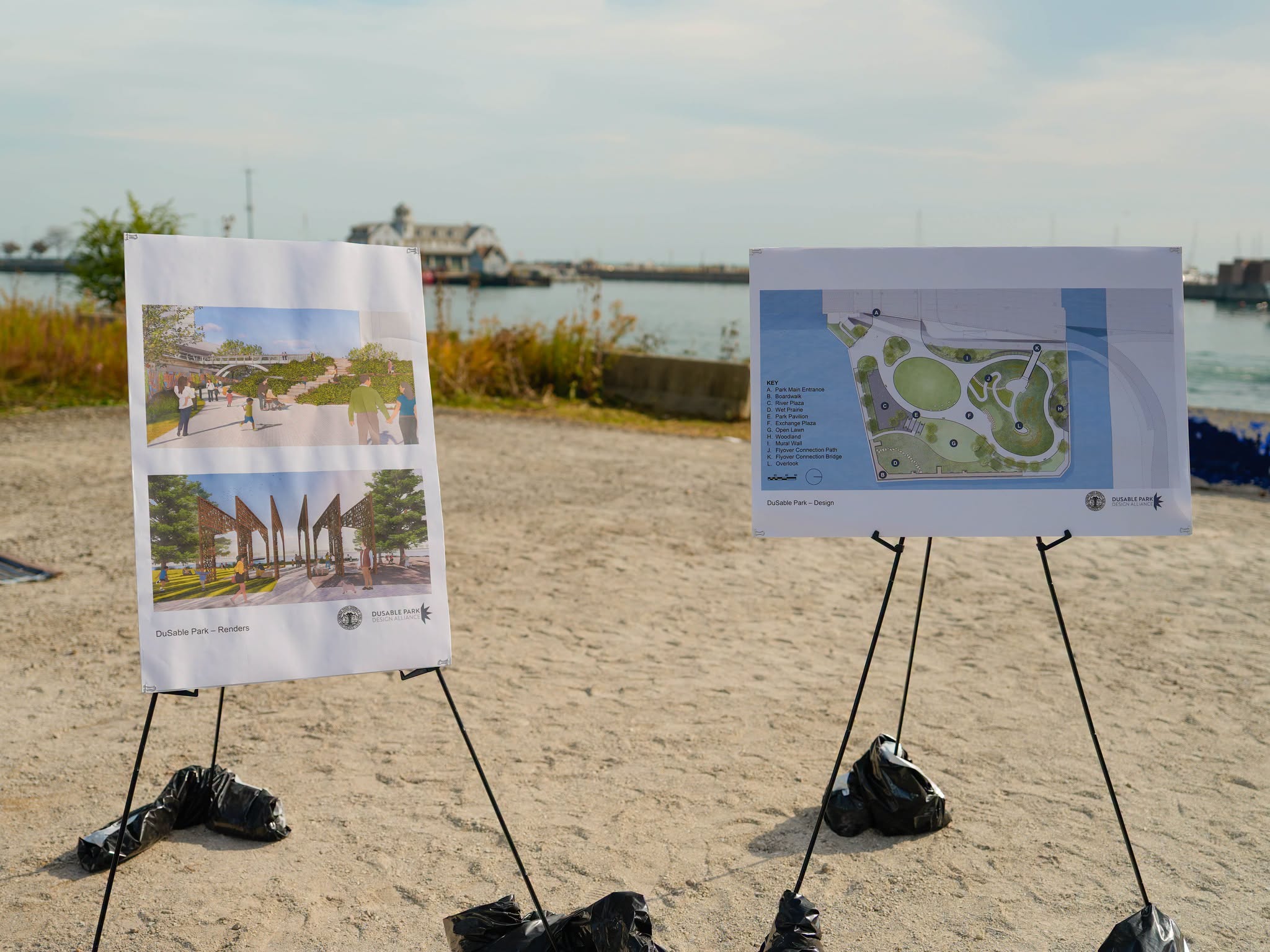
Designed by Ross Barney Architects and Brook Architecture, the park will include an open lawn, pavilion, woodland area, wet prairie, plazas, boardwalk and overlook.
The design follows the 2006 DuSable Park Framework Plan and incorporates educational programming, interpretive features and public art intended to recognize the area’s Indigenous history and DuSable’s legacy.
A major feature will be a newly commissioned full-body sculpture of DuSable. Haitian-American artists Branly Cadet, the sculptor, and architect Rodney Leon will develop the monument, which is expected to be completed in time for the park’s planned 2028 opening.
Additional public art will highlight Indigenous voices through installations, interpretive signage and a historical timeline. The Mellon Foundation has contributed $500,000 toward the Native Voices installation, which is being developed in coordination with the city’s Department of Cultural Affairs and Special Events as part of the Chicago Monuments Project.
The park’s development follows years of work by community advocates, public officials and other stakeholders to establish a public space at the prominent lakefront location.
“This park is the product of years of collaboration that has taken the dedication, persistence, and partnership of countless individuals and organizations to bring us to this historic moment,” said Chicago Park District General Superintendent and CEO Carlos Ramirez-Rosa.
Related Midwest Executive Vice-President and LR Contracting President Don Biernacki said the park, together with Founders Way and the Riverwalk extension, will create a pedestrian connection between downtown and the lakefront.
The project is scheduled for completion in summer 2028.