Chicago Construction News staff writer
Illinois’ data centre construction pipeline could generate more than 120,000 jobs and billions of dollars in economic activity over the next decade, while adding nearly $300 million annually to property tax revenues, according to a new study.
The report, Data Centers in Illinois: Economic Impacts and Key Policy Considerations, was released Oct. 1 by the Illinois Economic Policy Institute (ILEPI) and the Project for Middle Class Renewal (PMCR) at the University of Illinois at Urbana-Champaign.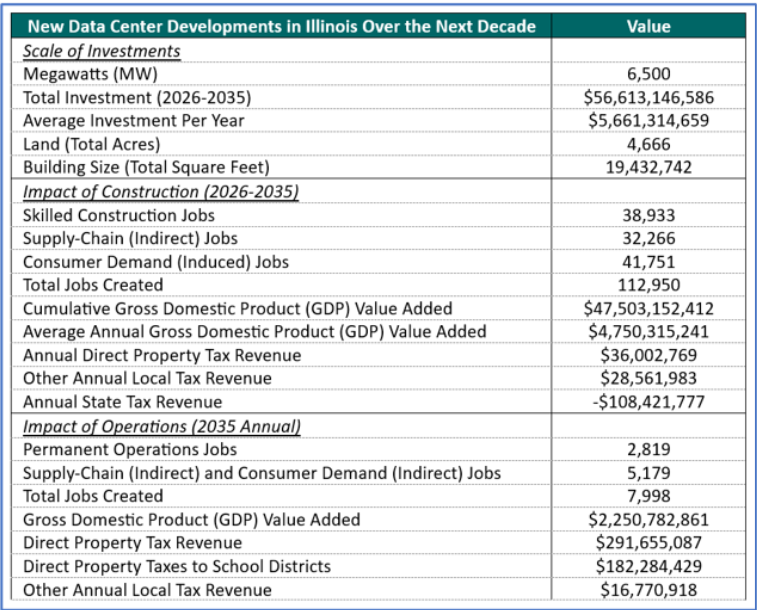 The Chicago area is the third-largest data centre market in the U.S., while Illinois ranks among the top 10 states for data centre development.
About US$16 billion was spent on data centre construction in Illinois between 2020 and 2024. Another US$57 billion in development is planned over the next decade, according to the study.
Researchers examined 75 data centre projects, including construction costs, investment, employment, energy and water use, and property tax payments. They used IMPLAN economic modelling to estimate the potential impact of future development.
The projected construction activity would create about 39,000 skilled construction jobs during the buildout phase, along with 3,000 permanent jobs annually once the facilities are operational. Those positions would include IT specialists, engineers and other technical workers.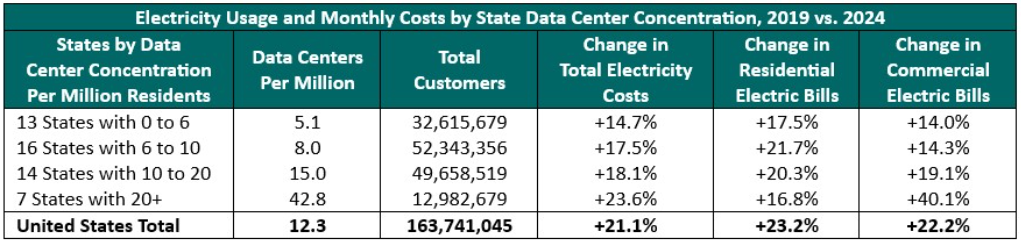 The study estimates another 41,000-plus jobs would be generated through supply chains and increased spending at local businesses.
At least one-third of the employment opportunities associated with the facilities are expected to pay six-figure salaries, the researchers said.
Data centre development could also significantly expand local property tax bases. Researchers estimate a new hyperscale data centre could allow local governments in an average-sized county to provide between three and 10 per cent in property tax relief to homeowners.
One operating data centre in DeKalb generates more than $30 million in annual property tax revenue, including about $19 million for public schools. The researchers said the facility has helped residential property taxes in the county grow about four per cent slower than the rest of Illinois.
The report also identifies electricity demand, water consumption and infrastructure requirements as potential challenges associated with the development boom.
Data centres currently account for about seven per cent of Illinois’ total electricity demand.
Researchers said Illinois will need additional clean power supplies as more facilities come online and recommended requiring data centre developers to cover the costs associated with their additional energy demand.
Other recommendations include encouraging developers to bring their own Illinois-based clean energy supplies and tying state sales tax incentives to stronger energy and environmental standards.
The study also recommends wider use of closed-loop recycled water systems and air cooling to reduce water consumption, along with battery storage and heat recovery systems.
Illinois is one of 38 states that provide sales tax exemptions for data centre equipment, materials and infrastructure. Gov. JB Pritzker suspended the exemptions in June.
The researchers said policy changes can help address infrastructure and environmental concerns while retaining the economic benefits of the sector.
“Data centers can generate positive outcomes for Illinois’ economy and workers, especially if accompanied by responsible, reasonable guardrails that protect taxpayers, ratepayers, and natural resources,” said Robert Bruno, director of the Project for Middle Class Renewal and a study co-author.
The report says Illinois’ location, access to resources needed to cool data centres and skilled workforce have helped establish the state as a major data centre market.