Chicago Construction News staff writer
The Chicago City Council has approved two housing initiatives aimed at expanding affordable homeownership opportunities and supportive housing across the city.
One ordinance gives the Chicago Department of Housing authority to negotiate and execute a City Lots for Working Families agreement with Sunshine Management, or a related entity, for the redevelopment of 14 city-owned lots.
Under the agreement, the lots would be sold for $1 each to support construction of up to 14 residential buildings, including 11 owner-occupied three-flat buildings and three owner-occupied two-flat buildings.
The City Lots for Working Families program is designed to encourage affordable homeownership while redeveloping vacant city-owned properties. The program also allows the waiver or reduction of some permit fees to help reduce development costs.
Program guidelines require at least 50% of the buildings to be sold at affordable prices determined by the Department of Housing, while up to 50% may be sold at market rate. The lots included in the ordinance were listed on ChiBlockBuilder during the April 2024 round.
City officials said the project will create new homeownership opportunities for working families while bringing new housing development to vacant properties.
In a separate measure, City Council approved financing for a 64-unit affordable housing development at 3959 N. Lincoln Ave. that will serve survivors of gender-based violence.
The development will include 14 one-bedroom units, 36 two-bedroom units and 14 three-bedroom units. Of the total units, 35 will serve households earning 30% or less of the area median income, while 29 units will be reserved for households earning up to 50% of the area median income.
The project will provide integrated and culturally competent supportive services for residents, according to city officials.
The development will include the adaptive reuse of the existing Fifth Third Bank building along with a newly constructed addition on the site’s parking lot.
The ordinance authorizes up to $11.5 million in multifamily financing for the project. Additional support is being provided through the Illinois Housing Development Authority, which awarded 4% and 9% Low-Income Housing Tax Credits. The Chicago Housing Authority will provide 64 project-based vouchers, ensuring rental assistance for all units.
City leaders said the initiatives are part of broader efforts to expand affordable housing, increase homeownership opportunities and provide stable housing for vulnerable residents.
Other planning and development measures approved by City Council included:
- Approval of a Cook County Class 7(b) property tax incentive to support the $500 million first phase of the 1901 Project near the United Center. The development will include a 6,000-seat music hall, retail and restaurant space, a hotel, parking garages and green space on approximately 12.3 acres south and west of the arena. Officials said the incentive is expected to generate nearly 2,000 construction jobs and more than 600 permanent jobs.
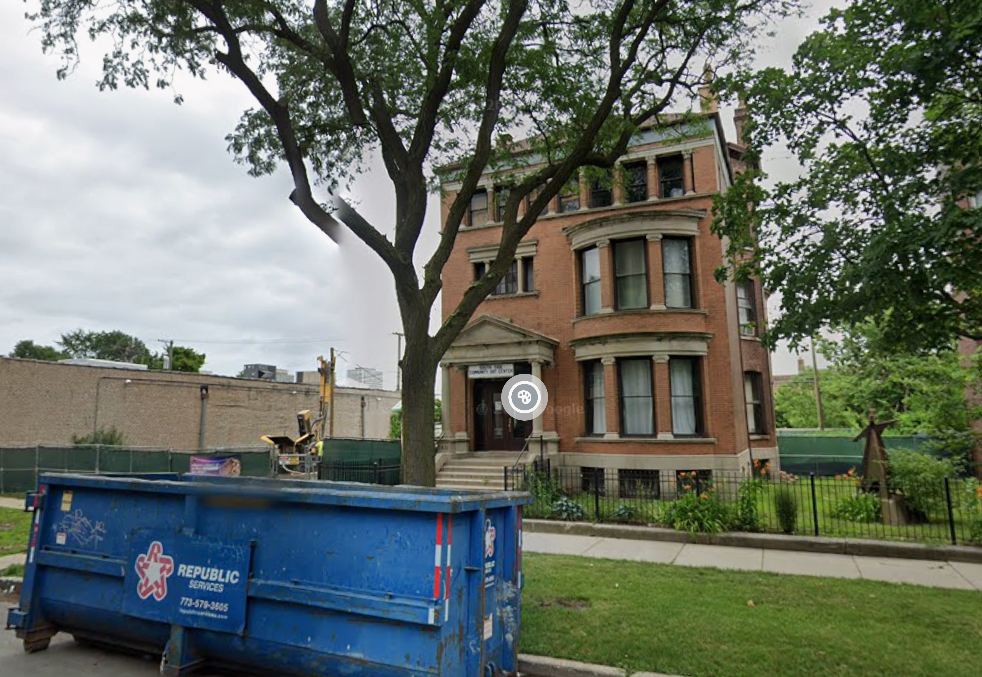
- Approval of a $5 million Neighborhood Opportunity Fund grant for expansion of the South Side Community Art Center in Douglas. The $12.8 million project at 3831 S. Michigan Ave. includes building improvements and a 10,000-square-foot addition for exhibitions and archival storage.
- Landmark designation and a Class L property tax incentive for the 44-story building at 30 N. LaSalle St. The designation protects the building’s exterior while supporting $132.4 million in commercial improvements and a residential conversion project that will add 349 apartments, including affordable units.
- Landmark designation for St. Paul Christian Methodist Episcopal Church at 4644 S. Dearborn St. in Grand Boulevard. The Tudor Revival church, completed in 1925, is the oldest Christian Methodist Episcopal congregation in Chicago.
- Landmark designation for DePaul University’s Byrne Hall and Cortelyou Commons in Lincoln Park. Byrne Hall served as DePaul’s original home when it opened in 1907.
- Landmark designation for the former home and studio of artist Roger Brown at 1926 N. Halsted St. in Lincoln Park. Brown was a leading figure in Chicago’s Imagist movement.
- Approval of an expansion of the Canal/Congress Tax Increment Financing district to include the Greyhound Bus Station property at 630 W. Harrison St. The move could provide financial resources to help preserve the station’s operations as Chicago’s primary intercity bus terminal.